Using it, every day
Open. Swipe.
Deep-dive.
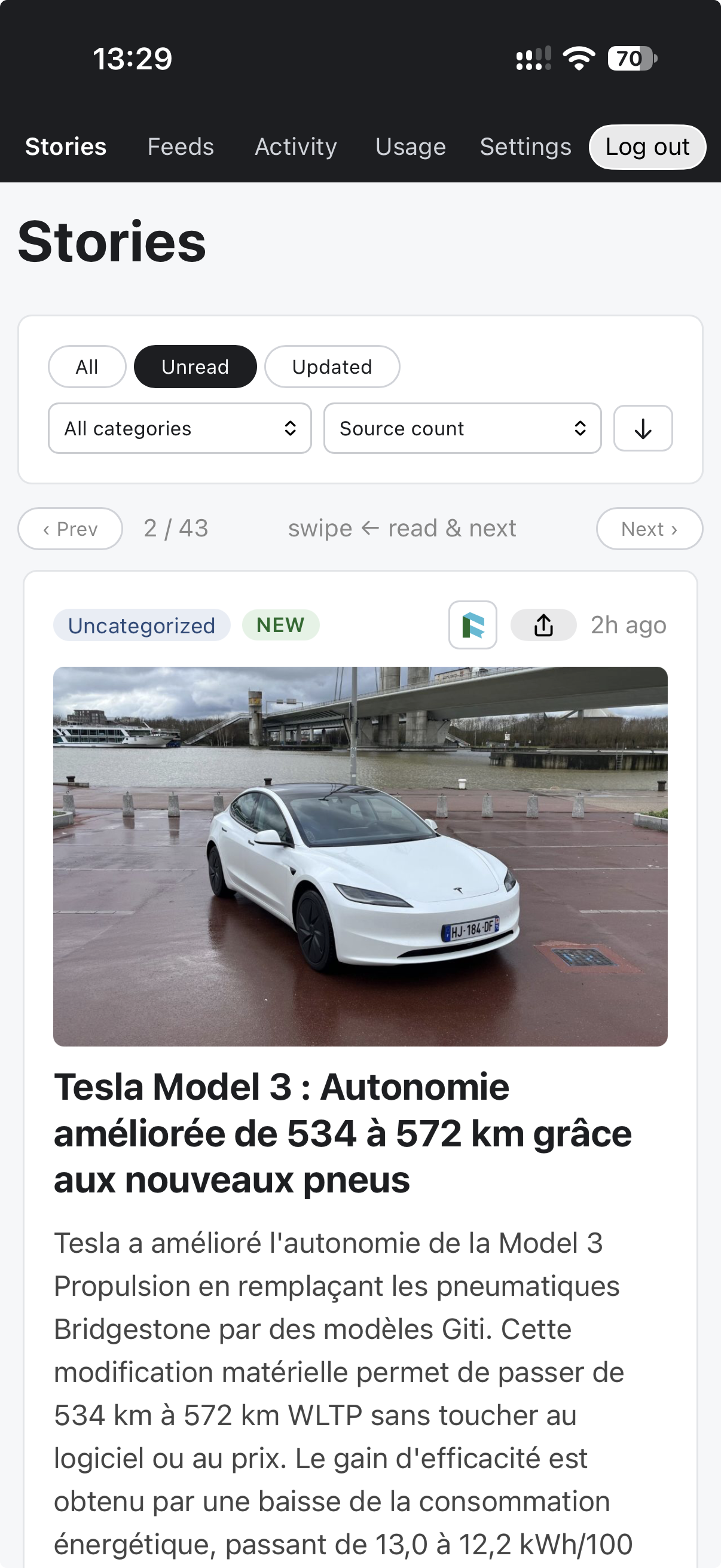
A web app on your desktop, an installable PWA on your phone. Stories you skipped stay read; Stories that gained new facts come back badged “updated” — never as fake unread.
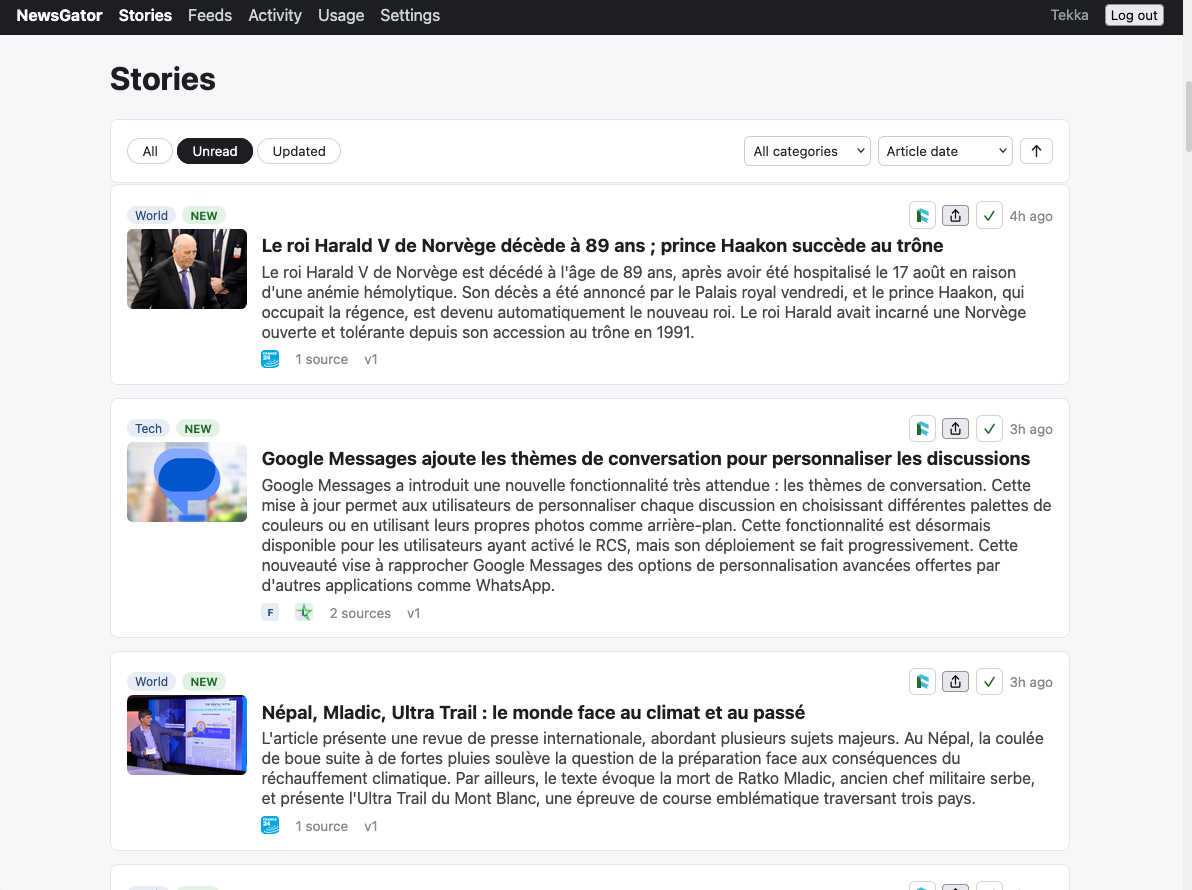

NewsGator reads your RSS feeds, merges the five articles covering the same event into a single Story, and hands you an honest headline, a two-minute summary and the sources — so you spend your time only on what deserves it.
I read the news every day, and it always felt like a struggle. I searched for the right app for years and never found it. In 2026, building an application is as easy as buying a piece of bread — so I described my need, and this is the result.
— the author, after one RSS reader too many
We are submerged. Knowing what to read is harder than reading itself — and the classic RSS workflow makes it worse, not better.
You subscribe to many sources because you want different angles — and get hundreds of items a day. Nobody has that time. So you skim, anxious, sure you're missing what matters.
Every outlet covers the same event. You read one, then a second — and the other three become pure noise you still have to wade through and dismiss, every single day.
A catchy title, an intro that says nothing. Click to the site, dismiss the cookie banner, scroll past the ads… to discover there was nothing in the article. Time is the most precious thing you have.
This is not a way to read the news.
It's a way to choose the news worth reading.
The summary exists to help you decide, never to replace the article. The last step is always the same: open the piece and read it for real.
Every Story lists every source it was built from, one tap away. Publishers did the work — they deserve the click and your attention.
Summaries can be wrong. Models can be biased. No claim of truth here — just a triage tool. Trust, then verify at the source.
You give it RSS feeds. It does the boring, repetitive part.
Polls your feeds like any reader. New entries are deduplicated and queued — nothing is ever lost, even across restarts.
Goes and gets the real article content — not the three-line RSS teaser designed to make you click. Images included.
An LLM writes an honest headline and a compact summary — in the language you actually think in, whatever the source wrote in.
Each article is embedded and compared against existing Stories. Same event? It joins that Story instead of creating noise — and if it brings new facts, the merged summary and headline are refreshed.
Open the app, scroll or swipe through a handful of Stories, and deep-dive the ones that matter — at the source, as it should be.
A web app on your desktop, an installable PWA on your phone. Stories you skipped stay read; Stories that gained new facts come back badged “updated” — never as fake unread.
Duplicate coverage merges into one Story with a versioned, evolving summary.
Headlines and summaries written in the language you configure — per user.
Share a Story to family in their language — translated on demand, sources included.
One tap pushes a permanent, self-contained copy to your Readeck instance.
Read stays read. New facts on a read Story badge it “updated”, never unread.
Admin-managed accounts; read state and language are per user.
Installs on iOS & Android, follows your OS theme, works on flaky networks.
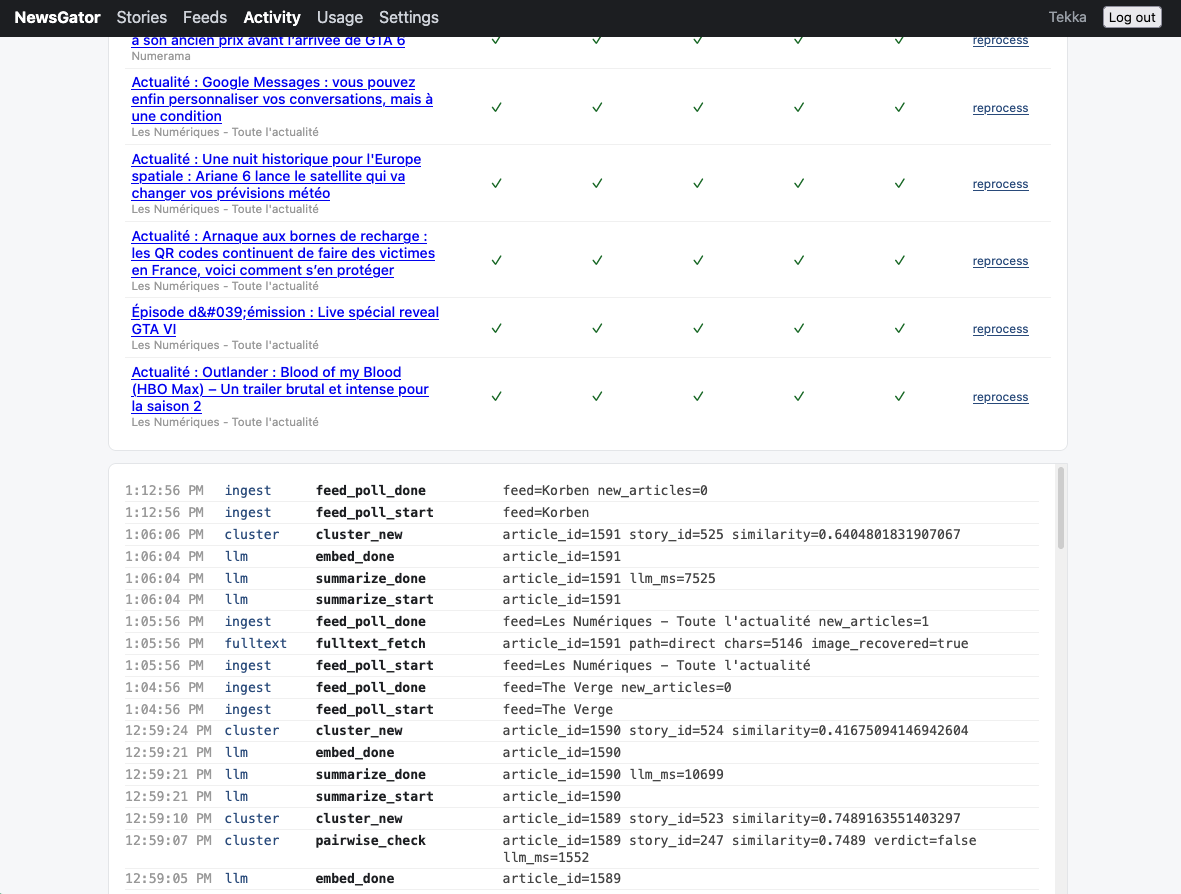
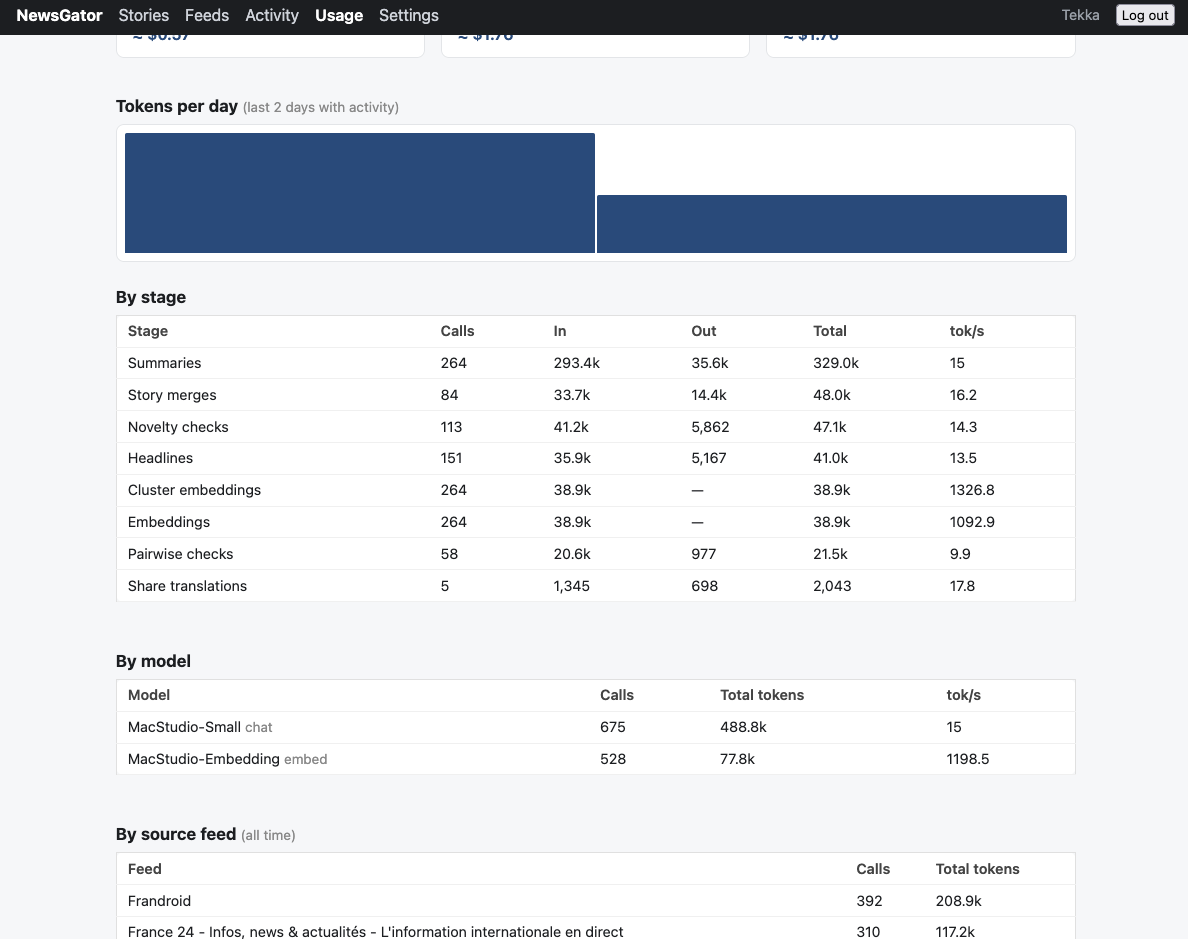
Live activity stream of every pipeline decision, plus an LLM usage dashboard.
Free, self-hosted, and it will never show you an ad or a cookie banner.